Why Do We Do This, Really? The Highest Purpose of Your Family’s Sports Journey


Pre-order Soccer Dad by David Murray here.
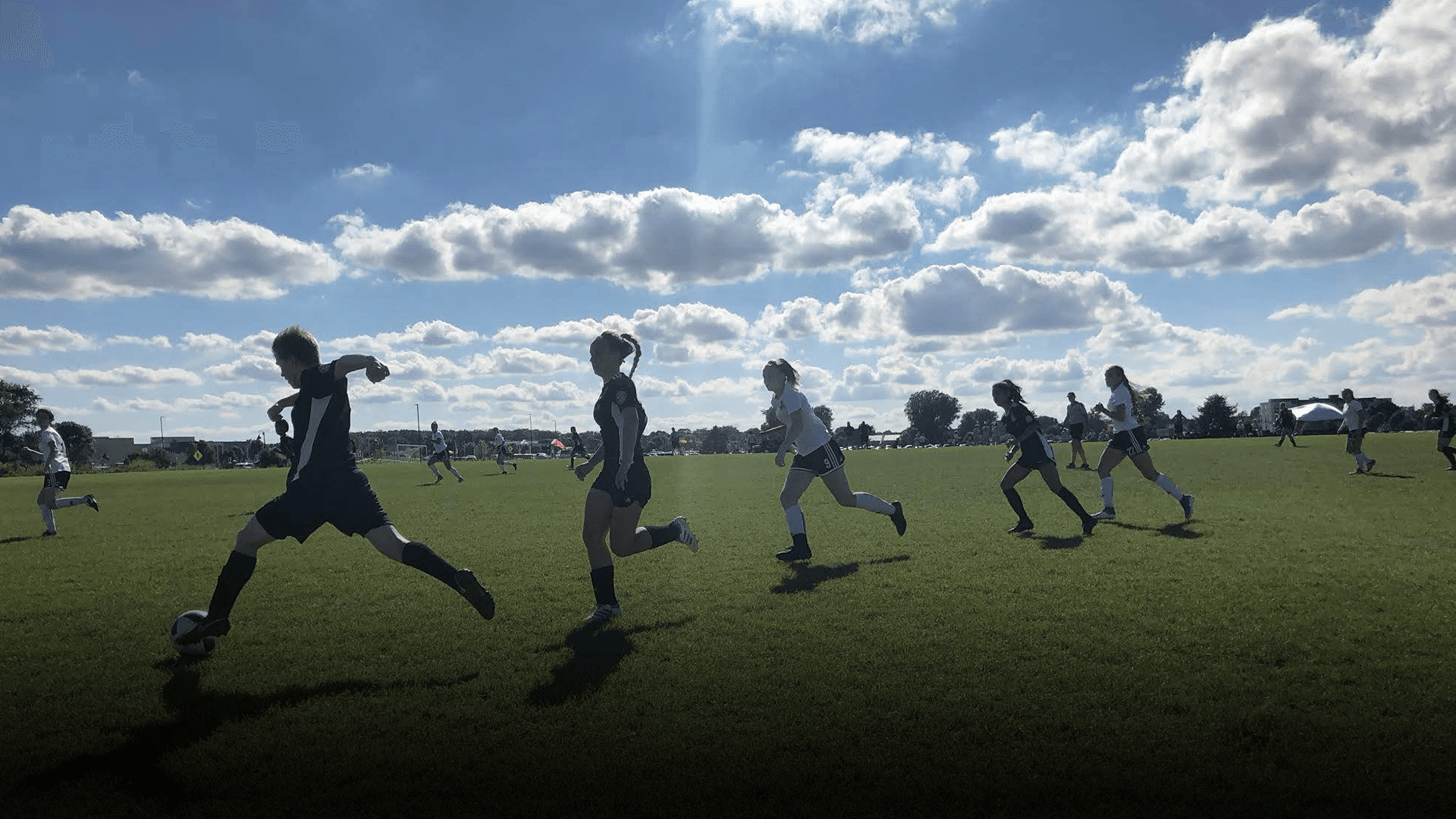
At no point in our groggy awakening to the madness of travel soccer did it actually occur to me or my wife that our family should consider stepping off this path.
Why?
Partly, because the alarming information came to us slowly—a super expensive uniform kit here, an unannounced Memorial Day tournament in Rockford, Illinois, there.
Every fresh absurdity always struck us if it would surely be the worst—a “welcome to travel sports” moment that we would look back on and remember with a laugh. But in fact, each season’s excessive cost and gratuitous travel would be next season’s table stakes. And next season’s outrage would be beyond today’s imagination.
Somehow the other parents didn’t seem as fazed as we were by all this. Yes, we could get them cranked up about the routinely inconsiderate scheduling of a tournament—games at 7:00 a.m. and 6:00 p.m. with nothing but a lost Saturday at a suburban mall in between—but it always seemed like we were doing the shouting, and the other parents the good-natured grumbling. Often, they just nodded back to us with a sympathetic shrug, as if to say, “This is travel sports. What did you expect?”
Also, what was our alternative? After six or seven years of serious soccer, we were going to come to our senses and pull our daughter out of this and get her involved in summer activities at the YMCA, or ceramics classes?
And ultimately, this didn’t feel like good money after bad; it seemed like good money after good—always worth the money and the hassle and the mental strain—for all of us.
I don’t know why the other families thought so, but I think I know why ours did.
When our daughter was very little—maybe six—our family happened upon a documentary about the 1999 US Women’s National Team that won the World Cup—the iconic one, when Brandi Chastain tore off her jersey after scoring the winning goal. Along with much of the nation that summer, my wife and I had watched that World Cup and been charmed by that team.
Belying its cheesy title, Dare to Dream, the film compellingly details the profound progress of women’s soccer since the US women won the 1991 World Cup in China and returned to an American-airport welcome of two or three people. In 1999, the women were selling out huge American football stadiums for their games.
In the film, the star players—Chastain, Mia Hamm, Julie Foudy, Kristine Lilly, Briana Scurry, Michelle Akers, Joy Fawcett, Carla Overbeck—recall their bus ride to play a semifinal game at Giants Stadium in New Jersey and being bewildered by the heavy traffic they find themselves in, on a Saturday. Until it dawns on them, as Overbeck puts it in wide-eyed recollection, “Oh my gosh, all these cars are for us!” This moment makes me cry every time I watch it.
In fact, I cry on and off throughout Dare to Dream, which our family has seen at least a dozen times, in the way some people read the Bible over and over—as a regular guide and reminder of the original purpose of this disorienting, endless project.
I cry at Dare to Dream partly because I was raised about a half a generation before the world began to see that women athletes were every bit as intensely competitive and passionate as men. The only women athletes I saw as a kid on TV were skinny little Olympic gymnasts, and tennis players like Chris Evert Lloyd, who used dainty-looking wooden tennis rackets, played in country-club skirts, and barely seemed to break a sweat. In my preppy suburban high school, the big girls’ sport was field hockey, also played in skirts—plaid, as I remember. They stooped over their short sticks, as if mopping a kitchen floor. Football, basketball, and baseball were part of boys’ identity. Field hockey, softball, and volleyball seemed designed to give girls something to do.
So to see women playing sports as necessarily intense and physical and fast and dangerous as soccer—this was an education for me. And once I had a daughter, that education became an emotional awakening, and a determination to see her express her power and strength and passion every bit as strongly as she felt them. And surely, every bit as strongly as the boys.
But if you imagine that girls’ soccer pitches are lined by similarly softhearted (or softheaded) parents and coaches, they’re not. On a soccer sideline or at a hotel bar with parents, I am the only wearisome parent of any gender who I ever hear talking about the idea that women’s soccer, that women’s sports, has this larger social purpose, of allowing young women to show their strength and speed and aggressiveness and toughness without apology in the loving and supportive company of other women who share that courage and desire.
The more daring the soccer dream, the less anyone thought—or spoke, anyway—about any kind of “higher purpose.”
But for us, the more daring our dream got, the more difficult its fulfillment and the more complicated the process and conflicting the forces at play—and the more essential for a higher prize on which to (quietly) fix this soccer family’s eyes.
At the end of Muhammad Ali’s last brutal fight with Joe Frazier, he sat alone in his dressing room with bumps all over his battered head, repeating over and over to himself, “Why I do this? Why I do this?”
Your family will have moments like that. Long, silent drives home from early tournament losses. Periods of seemingly stalled soccer progress. Huge soccer expenses in lean years; competing, conflicting family priorities.
You’ll ask why you do this, really. And whatever the reason, your family will need to share it and revisit it frequently, to make sure it still holds true.

GET YOUTH INC UPDATES
Get real tools, fresh perspective, and inspiring stories to help you get the most from youth sports. Plus, you'll be entered for a chance to win premium fan wear to rep your favorite school or club