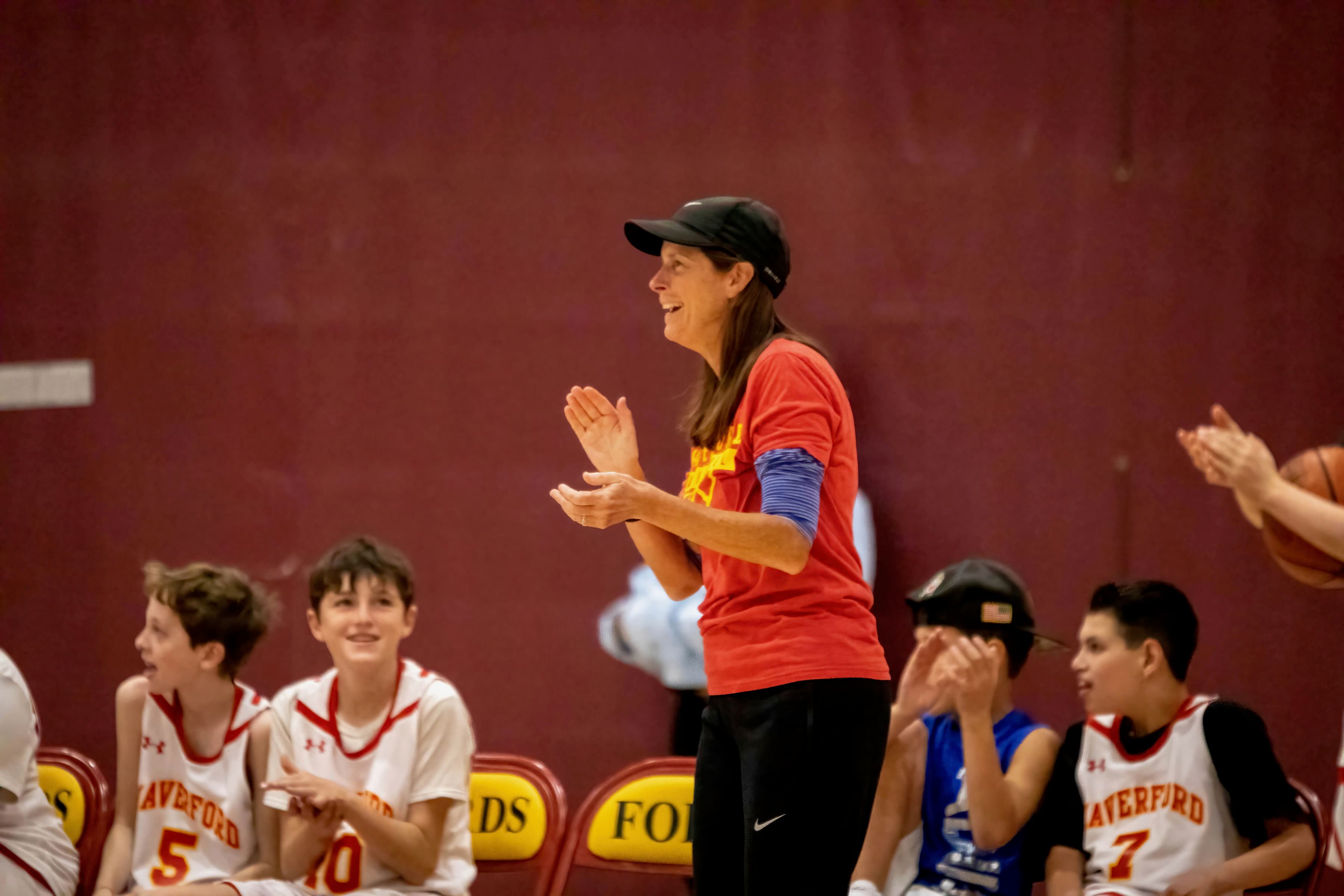


Last spring, at the Project Play conference in Boston, I met a coach whose story inspired and motivated me. Linda Martindale is the former head coach of the boys high school varsity basketball team at Lincoln-Sudbury (MA) — one of the very few women who have run a program at that level anywhere in the country. Youth Inc. had featured a news piece on her and her son making history together on the court (Today Show story here) , and when Linda and I started talking, I realized we were circling the same idea from two different corners of the basketball world — her up in the Boston market, me down in Philly: what happens when young men, in one of the most competitive environments there is, learn to compete, win, lose, and grow under a woman's leadership.
I told Linda about our own version of that story. My son's club basketball coach is a woman named Marykristin Haskell — "M" to our family and to the players who have grown up under her coaching for years. Our paths crossing with hers still feels like a stroke of luck to me — a bit of serendipity that put our son in front of exactly the right coach at exactly the right time, and my wife and I will always be grateful for it. M's basketball IQ is phenomenal, but what has actually shaped my son goes well beyond Xs and Os. She has taught him how to compete with sportsmanship, how to have fire in his belly while still being polite, how to lead, how to accept correction and accept leadership from a woman, and — maybe most importantly — how to have fun while doing all of it.
.png&w=3840&q=75&dpl=dpl_8bQEZhTEg2joBD5pRRD6XNFj3Jma)
The moment I finished telling Linda about M, she asked if she could get her on her podcast, Game Changers. I'm thrilled to say that episode is now live, and after listening to the full conversation, I wanted to pull out what made it resonate for me — because it's exactly the kind of story Youth Inc. exists to tell. You can find the full episode here.
The coachy gene
M Haskell didn't set out to become one of the rare women coaching boys' AAU basketball. She grew up in a basketball family — her father and uncle coached together at George Washington, American, and Fairfield, and her uncle went on to coach in the NBA. She remembers being in first and second grade, napping after school so she'd be allowed to stay up for Big Five doubleheaders at the Palestra. "This was just our normal," she told Linda. "We were just around the sport all the time."
She started coaching her son almost by accident, in kindergarten and first grade, in running before basketball ever entered the picture. By fourth grade she was coaching his AAU team and telling the parents, half-joking, that she was "signing a one-year contract" — figuring some dad would eventually want to take it over. He's in tenth grade now. She's still renewing that one-year contract, every season.
Walking into a room full of male coaches
Linda asked her the question that sits at the center of this whole conversation: why don't more women coach high school boys? M's answer was blunt. "The AAU world is crackers," she said. "It's very male-dominated. I go into these tournaments and the refs are male, the coaches are male. People think I'm the team mom when I introduce myself... I have to tell them that I'm the coach."
What struck me most is that she doesn't experience the job as fundamentally different from coaching girls, which she's also done. It's the environment around her that treats it as an anomaly — not the coaching itself. And she's clear-eyed about what that costs the sport: there are women coaching boys at young ages all the time, she said. For whatever reason, "it doesn't stick."
Trust, told straight
Ask any parent what they actually want from a coach and you'll get some version of what M Haskell described without being asked directly: trust, communication, and accountability that runs in both directions.
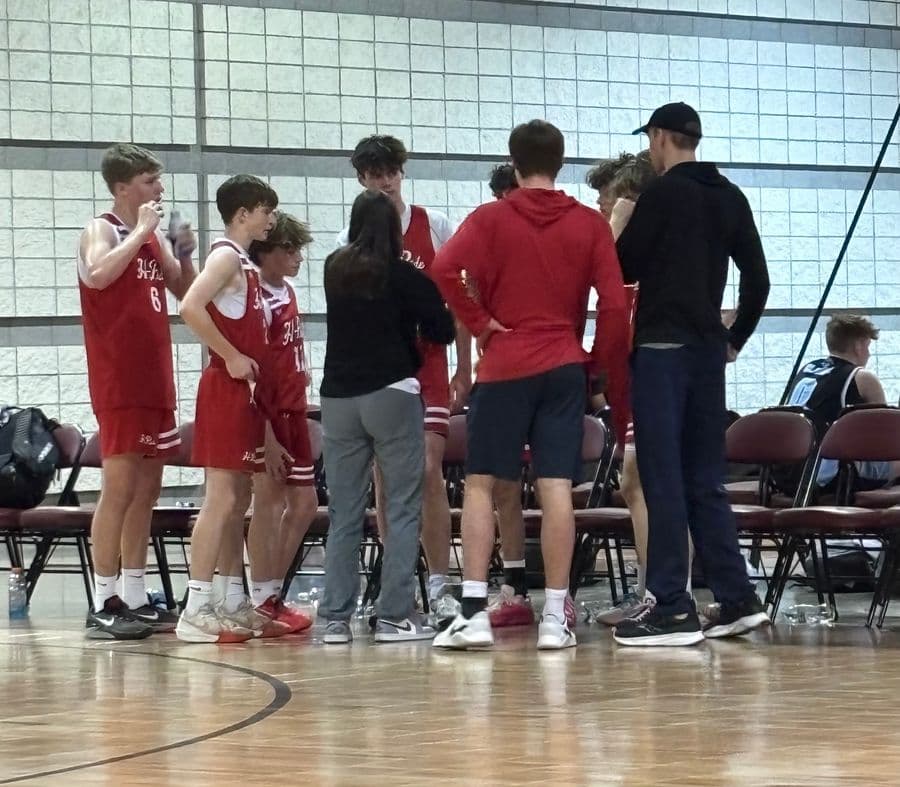
When her team blows a game because she didn't have them ready for a zone defense, she tells them so directly. "That's on me," she said. "We'll get the zone stuff ready for next time." Linda's response — "you're telling me you tell high school boys that you made a mistake?" — is exactly the reaction most people would have, and exactly why it matters. A coach who owns her own mistakes out loud is a coach whose players believe her when she tells them the truth about theirs.
That same directness shows up in how she talks about confidence. She spends just as much time building it in boys as she did coaching high school girls — "boys need that," she said, flatly rejecting the idea that young men require a different, tougher emotional register. And it shows up in the small stuff she chooses to celebrate out loud: not the kid who scored, but the kid who set the screen that got him open; not just the assist, but what she calls the "hockey assist" — the pass before the pass that started the whole possession. Nothing that shows up on a stat sheet. Everything that shows up in how a team actually plays.
Building a team that wasn't there yet
One of the parts of the conversation I found most meaningful wasn't about AAU basketball at all. M Haskell's older brother, Chris, had cerebral palsy. As a teenager, she remembers playing basketball in the driveway with Chris and a friend of his who used a wheelchair — neither of them able to lift the ball, rolling it down their legs to her so she could put it through the hoop. (Note-- Chris passed away after this episode was recorded, which makes that memory, and everything M has built since, land even more.) Decades later, when her son was in sixth grade, she met a set of twins at his school who are on the autism spectrum and nonverbal. She asked their mom if the boys would want to shoot around. They did. It grew from there — first informally, then into an actual team, then into what is now the Unified Sports League: students with and without disabilities competing together in real practices and real games. It's not hard to see Chris's fingerprints on all of it.
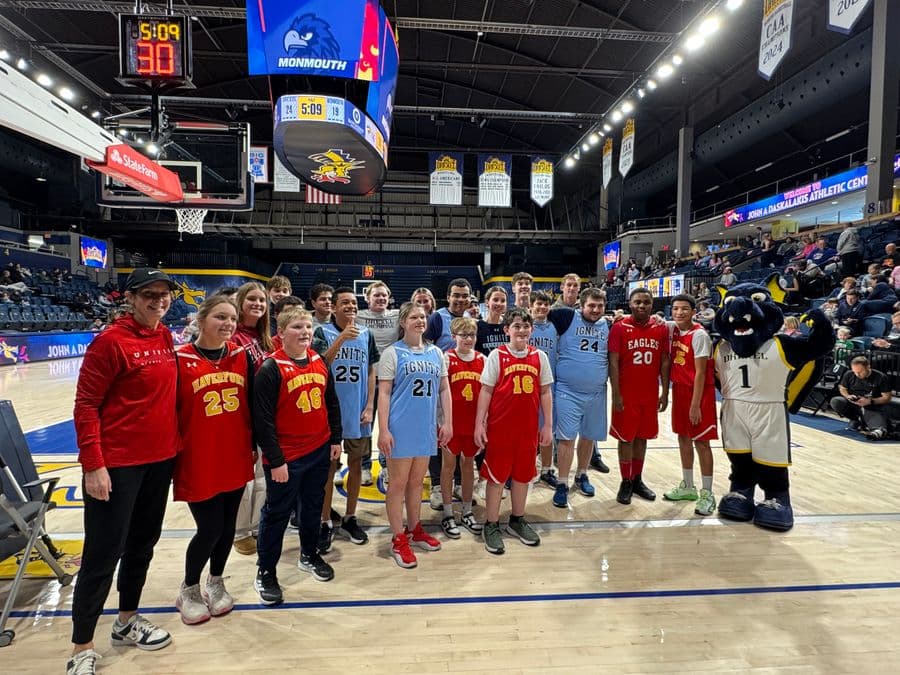
It started with four kids. It's now roughly 150 kids across ten teams. One of the moments M described has stuck with me: the first time she brought real, if borrowed, uniforms to practice, the kids ran into the bathroom to change into them on the spot. One of them asked, "we get a real uniform?" She was parenting a son with dozens of uniforms sitting in his closet from a lifetime of different sports, standing next to a 14-year-old for whom this was his first one, ever. A family that moved out of state took the idea with them and started their own program from scratch — proof, as M put it, that "it's so easy to get going. All you need is a few interested parents, and it just blossoms."
Seeds that don't stay small
Here's the thing about what M and Linda are actually doing, season after season, one practice at a time: none of it stays contained to the gym it happened in. A 10th grader who's spent years being coached, corrected, and trusted by a woman doesn't leave that lesson on the court. He carries it into a college locker room, a first job, a marriage, a team he manages, a daughter he raises — into every room where he'll eventually have to decide whether he can take direction from a woman, follow her lead, or trust her judgment over his own instinct. That's not a soft outcome. That's the actual, compounding return on youth sports: not the championships, but the decades of downstream relationships those young men will show up to differently because of two years, or ten years, on a roster like this one.
The same is true of the kids in M's Unified Sports League. The neurotypical teenagers who suit up next to teammates with autism or physical disabilities aren't just having a nice afternoon — they're building the instinct to include people who, in a lot of rooms, don't get invited to the table. Multiply that by 150 kids, ten teams, and however many years this keeps growing, and you're not looking at a basketball program anymore. You're looking at a pipeline of future coaches, managers, teachers, and parents who will default to inclusion because it's what they already know how to do. That's the kind of seed that doesn't show results this season, or even this decade — it shows up twenty years from now, in a hundred rooms neither M nor Linda will ever set foot in.
Why this belongs on our site
Youth Inc. exists because we believe sports can teach young people things no classroom can — and because who is doing the teaching matters as much as what's being taught. M Haskell's story is a case study in both halves of that belief: what a young man learns from being led, corrected, and championed by a woman who refuses to soften her competitiveness or her honesty, and what an entire community gains when someone decides that "having fun together" is reason enough to build a team for kids who'd otherwise never been asked to the table.
Linda Martindale's Game Changers podcast exists to surface exactly these stories — coaches who are doing the real work, mostly unseen, that actually changes lives. I'd encourage anyone who cares about youth sports, and especially anyone raising a competitive kid, to listen to the full conversation. Visit Linda's site at https://martindalecoaching.com/ .

GET YOUTH INC UPDATES
Get real tools, fresh perspective, and inspiring stories to help you get the most from youth sports. Plus, you'll be entered for a chance to win premium fan wear to rep your favorite school or club