The Power of Sport: A Conversation with Jason D'Rocha, Vice President and Growth Coach at Sportball
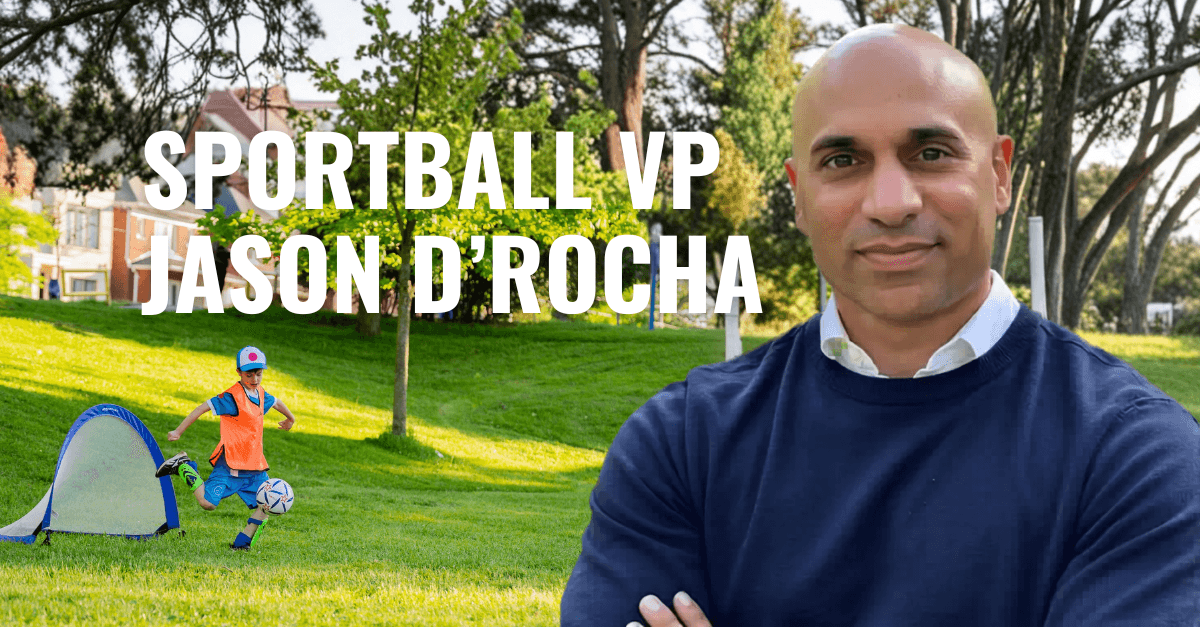

Jason D’Rocha has dedicated his career to one mission: giving children the physical and social tools they need to thrive. As VP of Sportball, a youth sports enrichment company that helps kids gain the confidence and competence they need to stay active for a lifetime, Jason brings a degree in child psychology along with 20 years of industry experience, and hands-on experience as a dad of two young athletes. We sat down with Jason to learn about his story, talk child development, and the future of youth sports.
What aspect of youth sports are you most passionate about?
So much of our approach to health and well-being in this world is reactive - problem solving of issues as they arise and defaulting to treatment mode without much focus or investment into preventative care. It feels really good to be part of the solution, as we know that regular exercise from a young age is one of the best tools we have to prevent health-related issues and disease. And to give kids the foundational skills, the confidence and competence they need to be successful to just keep playing the game - whether they choose to play at the competitive or rec level - for years to come.
I think that's as important to human development as any other life skill we would teach a human being, whether it's eating healthy or brushing their teeth or going to school and learning to read. Developing a child's physical literacy is just as important.
Sportball starts children in sports as young as 16 months. Why so early?
It's not that we think children should start earlier… I think it's more so: if you can create an environment that is safe and developmentally appropriate for a child to learn, foster some skills, create strong bonds, and create teachable moments, well then wonderful. Whether that’s a swim class or a music class or a sports class, what we've done at Sportball is use developmental milestones to guide our lesson plans and our curriculum, so that we meet children where they're at.
We also bring parents into that mix, and we bring a coach into that mix, so it's almost a trifactor: Is the child learning in a safe place with safe people? Does the coach understand how to deliver a program experience so the child can connect?
We also focus on the parent. We have to get a license to drive a car, but we don't need a license to have a child and raise a child — which is frightening, because we're setting this child up for independence one day. To be in a classroom where you can see what lights your child up and puts a smile on their face, or if the child falls or misses a shot, how to properly support your child in a way that makes them feel like “it doesn't matter if I score, mom or dad loves me anyways and they're there to support me.”
What surprises you most about the youth sports industry?
I think we sometimes forget the whole point of what childhood is really all about. What I see happening in youth sports is we're almost taking the adult experience and forcing children through it. When you have adults in sport, there's often a very performance-based, outcome-driven experience.
We have this pressure to perform at higher levels. “Do you play competitively?” “Is it a tournament?” “Did you win a trophy?”
And now we have social media where everything seems to be in a hyperbolic chamber. Instead of seeing our favorite athletes on TV or in magazines like it used to be, now we're seeing parents and leagues and coaches post pictures and videos of children while they're still learning.
As a child, I can't imagine the pressure that must put on them. Whether it's specializing too soon or being forced into a sport they don't have a passion for. The amount of money that gets invested to put these children into competitive travel leagues and, whether it’s consciously or subconsciously, that does have an impact on a child’s experience to perform.
We know for a fact that kids just need to have fun. You need to create a safe environment for them to learn and create bonds, and for them not to have those pressures for them to develop a passion. We see a lot of athletes who end up not enjoying their sport.
What makes Sportball stand out in the youth sports industry?
We have a very holistic, child-centered approach to exposing children to sports. We meet children where they're at. We use developmentally appropriate lesson plans. We make sure we engage their imagination in such a way that children don't even realize that learning is taking place, that skills development is taking place. They're just there to have fun with their friends.
The other part that really separates us is we pay just as much attention to the coach and to the parent as we do to the child. We have a concept at Sportball called coaching with purpose, where every skill, game, activity, and instruction has a purpose. We train our coaches so that when they're doing a skill or an activity with children, they know why they're doing it. Not just developing gross motor skills like hand-eye coordination or balance or timing, but also the social opportunity that comes with it. Turn-taking, using pro-social language, how to cope with winning and losing or missing a shot. Our coaches really look for these opportunities to guide children's learning.
And then for parents — making sure they understand what great looks like. So that if they integrate their child into a more competitive experience, they know what they're looking for in a coach and a program.
What is your favorite youth sports memory?
I think one was finding a pearl in pain. I remember being in grade six ,I was a really athletic kid and all my classmates knew me as the athletic kid. But I'll never forget the teacher saying we were going to play golf. I didn't grow up with a lot of means. My dad gave me a ball and said, “Play as many sports as you can, as long as they're free.” Golf was something I had to wait until I was much older for. And regardless of how athletic I was, as soon as I heard we were going to play golf, I kind of sunk into my chair. I was so worried. I couldn't tell the difference between a drive and a putt, and I thought, “Is everyone going to think I'm not athletic anymore because I can't play this sport?” That experience has allowed me to develop this motivation to give kids exposure to as many sports as possible, and to create as much accessibility.
And then, because I'm also a very competitive person, I was able to reach a certain level in basketball. I remember winning a championship for my high school, and just the feeling of resilience and showing up. I couldn't control the outcome, but that feeling has stayed with me as a professional. I'm willing to put in the work and I never give up, because I realize I can put myself within striking distance of whatever I'm working toward. I got that from basketball.
What is one lesson from sport that has shaped your life?
Nothing worthwhile is gained without sacrifice. That's probably what sport has taught me more than anything. If you want to achieve something, you have to give it everything you've got. You have to show up, you have to be disciplined. Sometimes I'd rather sit on the couch, I have those moments. But it's not healthy for me, it's not healthy for my kids. And every time I get out there, whether it's going to the gym or going on a bike ride with my kids, the joy I get from those moments is worth all of the sacrifices. It turns out they also add years to my life, add years to my relationships, and strengthen the bonds I have. Sometimes you have to sacrifice those small things for the bigger wins.

GET YOUTH INC UPDATES
Get real tools, fresh perspective, and inspiring stories to help you get the most from youth sports. Plus, you'll be entered for a chance to win premium fan wear to rep your favorite school or club