Start Sooner, Play Better: Rethinking How Kids Get Their Start in Sports
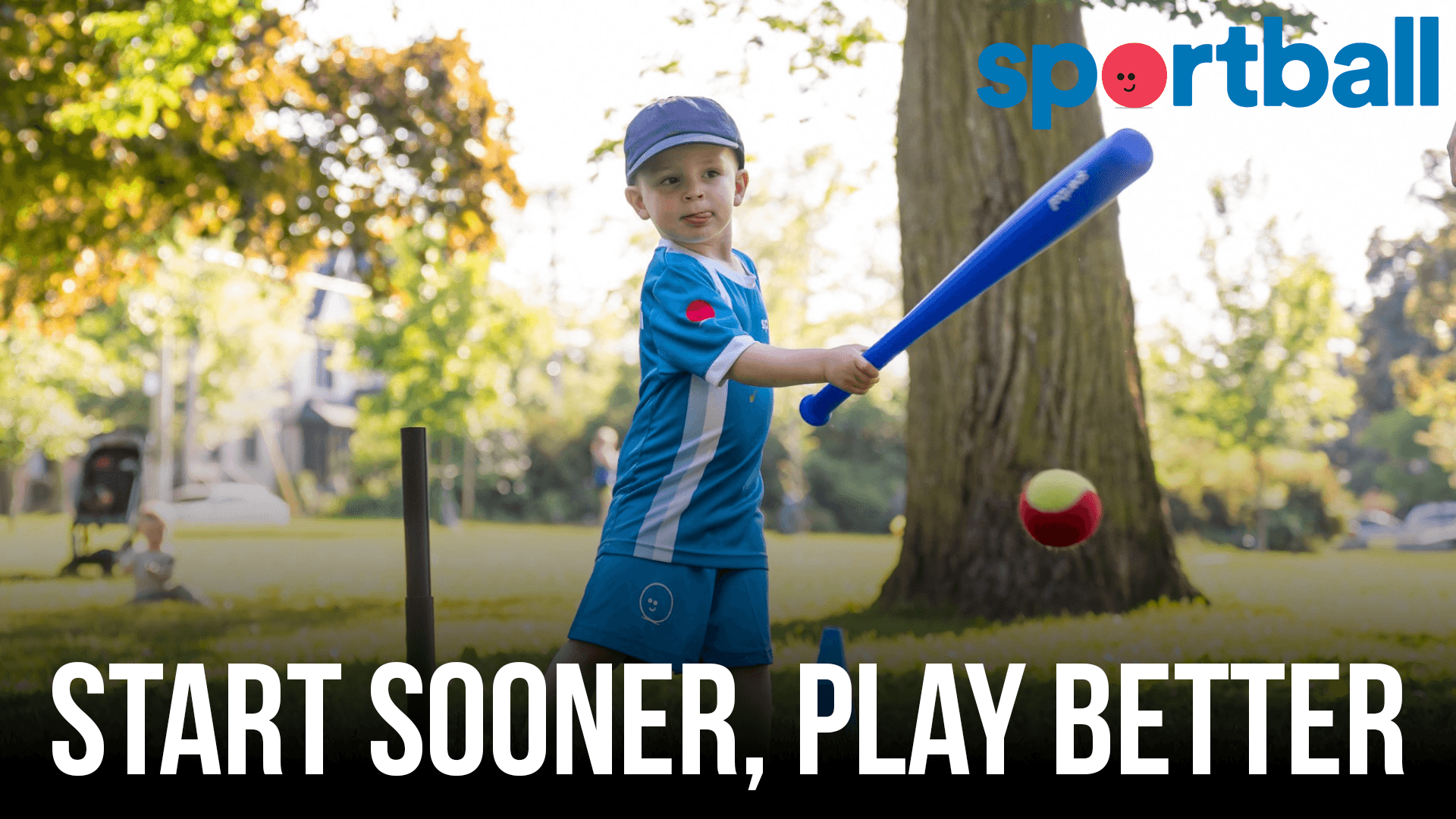


Let’s start with a question that makes a lot of parents uncomfortable:
What if the problem with youth sports isn’t when kids start… but how?
Because if you’ve been paying attention to dropout rates, burnout, rising injuries, and the $30B+ youth sports machine, you already know something is off. According to the stats:
- 70% of kids quit sports by age 13. (AAP)
- Early specialization is linked to burnout, injury, and dropout. (PMC)
- And most programs? Built for adults, scaled down for kids.
So when someone says, “You can start your child in sports at two,” your instinct might be to push back.
But that reaction reveals the real issue: We’re picturing the wrong version of “sports.”
The Lie We’ve Been Sold About “Starting Early”
In today’s American youth sports system, “starting early” usually means more structure, competition, pressure, and earlier specialization. That’s exactly what the research warns against.
The American Academy of Pediatrics is clear: young children shouldn’t be in organized, competitive sports. They should be learning through play, exploration, and fundamental movement skills (Pediatrics Publications). And yet we keep pushing 4-year-olds into leagues and rankings. No wonder kids burn out before high school!
-900x506.png&w=3840&q=75&dpl=dpl_AFLoF182W3Nj3tFDwDwcphbJsLH8)
The Twist: Starting Earlier Might Actually Fix This
Not earlier competition. Not earlier pressure. Earlier play.
When done right, early childhood movement:
- Builds physical literacy (running, throwing, balance) that underpins all sports. (PMC)
- Increases the likelihood kids stay active for life by 40%. (Project Play)
- Decreases the risk of diseases, like osteoporosis, by 40%. (PMC)
- Supports confidence, social skills, and emotional regulation. (Dr. Jean Clinton)
- And creates positive associations with movement before comparison and pressure show up.
In fact, kids don’t quit sports because they started too early. They quit because they stopped being fun. (AAP)
What “Sports” Should Actually Look Like for Young Children
We need to take the “traditional” meaning of sports and re-write the cultural narrative. This time, no drills, no teams, and no competition.
For children under six, “sports” should look like:
- Sports instruction through storytelling and non-competitive games
- Rolling, kicking, balancing, chasing
- Exploration without pressure
- Parent-and-child interaction (for children ≤3)
This is brain development in motion.
Early childhood is when neural pathways for movement, confidence, and social behavior are built. As research consistently shows, sport instruction works best when it matches a child’s developmental readiness, not an arbitrary age or competitive structure. (PMC)
-900x506.png&w=3840&q=75&dpl=dpl_AFLoF182W3Nj3tFDwDwcphbJsLH8)
The Real Problem: We Skip the Foundation
Here’s what most youth sports systems get backwards:
We skip straight to games…
Before kids know how to move.
We emphasize performance…
Before kids build confidence.
We organize teams…
Before kids learn how to share, take turns, and cooperate.
Then we wonder why kids feel overwhelmed, parents are frustrated, and everyone burns out.
What the Best Programs Do Differently
Programs like Sportball have quietly been doing something radical for 30+ years:
We’ve designed sports around the child, not the sport:
- Multi-sport exposure (not early specialization)
- Age-appropriate skill progressions
- Purposeful coaches trained in child development
- A focus on fun first, skills second, competition much later
This aligns with what both research and common sense tell us. Kids who build a broad base of movement and confidence early on are more likely to stay in sports and succeed later in life (EJ Sport).
%25202-900x506.png&w=3840&q=75&dpl=dpl_AFLoF182W3Nj3tFDwDwcphbJsLH8)
A Better Way Forward for Youth Sports
As parents, coaches and youth sports leaders we need to stop asking: “How early is too early?” and start asking: “Is this program developmentally appropriate?” A 2-year-old can absolutely get started in sports, and a 7-year-old can absolutely be pushed too far.
If we want fewer kids quitting, less burnout and injury, and more confident and capable humans, then we need to rebuild the foundation, not with earlier competition, but with better beginnings.
Programs like Sportball are quietly helping reshape youth sports into what it was supposed to be all along: Fun. Inclusive. Development-first!
At the end of the day, the true power of sport isn’t about producing a small number of elite pro athletes we idolize from the sidelines, but about developing a large number of confident and capable pro humans who love to play.

GET YOUTH INC UPDATES
Get real tools, fresh perspective, and inspiring stories to help you get the most from youth sports. Plus, you'll be entered for a chance to win premium fan wear to rep your favorite school or club