

There is something powerful about getting older and realizing that some of the conversations that hurt us the most were actually conversations that changed our lives for the better. Last week, I called a coach that I had not spoken to in more than 32 years.
Coach John Griffin was my head coach at Saint Joseph's University, and when we got on the phone, the conversation was warm, relaxed, and genuinely enjoyable. We talked about family, basketball, and life. He told me he had followed my career since my days at Cornell University and congratulated me on the different things that had happened over the years. Then I got to tell him why I had really called and how grateful I was for one of the hardest conversations of my life.
During my first two years at Saint Joseph’s, I did not play much. Looking back honestly, I did not deserve more playing time than I got. I had lost confidence, and I was struggling. Even if I had played at my best every single day, I still do not know that I would have played much more than I did.
The hardest part for me was that basketball had been a huge part of my identity since I was seven years old. It was something I had always been recognized for being good at, and for the first time in my life, I was one of the last players on the bench. Internally, I was having a very difficult time handling that reality.
At the end of every season, we would have exit interviews with the coaches. Even though I was frustrated and disappointed with how things were going, I had never thought about transferring. Loyalty mattered deeply to me. I had signed to play four years at Saint Joseph’s, and in my mind, that was where I was going to stay.
Then Coach Griffin asked me a question that completely caught me off guard.
“Alex, have you ever thought about transferring?”
That question hurt more than anything else that was said during the meeting because it had never even crossed my mind. I remember immediately saying, “Absolutely not, Coach. I signed here for four years. Good or bad, I’m staying.”
Then he explained why he had asked. He told me that when he played college basketball, he had gone through something similar himself. Coach Griffin had played four years at Saint Joseph’s and had opportunities to take different paths both coming out of high school and later during college.
One of those opportunities out of high school had actually been Cornell, and later he also had an opportunity to transfer to Drexel University, where he likely would have played much more. Instead, he stayed loyal to Saint Joseph’s, worked hard, competed, and did well in school, but never really got the full experience of playing a lot of college basketball.
Then he started talking honestly about our roster. We already had Mark Bass ahead of me. Terrell Myers, who was younger than me, had really started coming on. We had also signed Rashid Bey, who was an excellent player and honestly better than I ever was in college basketball. Coach Griffin said that by my senior year, he probably saw me playing somewhere around 10 to 15 minutes a game. That part did not feel good to hear, but emotionally I was already wounded from the original question. All I heard was, “Get out.”
The truth is, that is not what Coach Griffin said. He never told me I had to transfer. He never told me I was unwanted. Looking back now, I can clearly see that he was trying to help a young player he identified with because he had experienced something similar himself. But at 20 years old, through the lens of insecurity, disappointment, and wounded pride, I heard rejection.
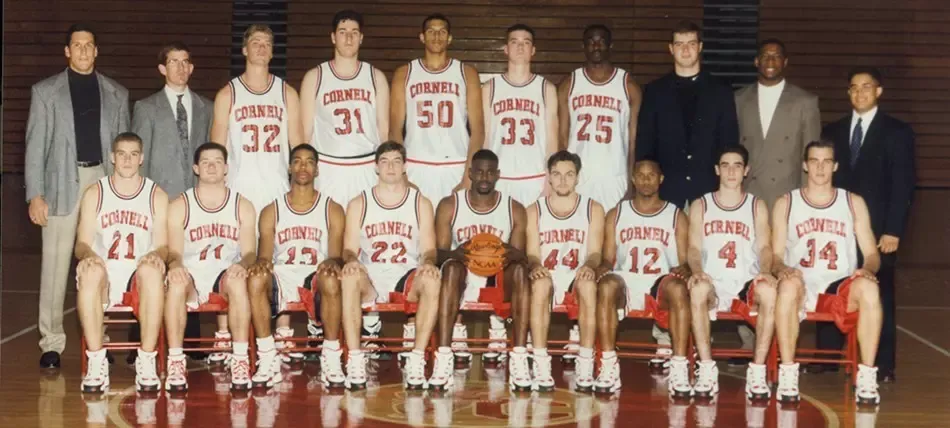
For years, that conversation hurt me deeply. Eventually, I transferred to Cornell University. I had to sit out a year because of transfer rules, and that year ended up being incredibly valuable for me. I got to practice with the team, build relationships, settle into the university, and find a major that fit me perfectly, one that was not offered at Saint Joseph’s. Then something happened that I never could have imagined during those difficult days sitting on the bench at Saint Joseph’s. Even before I became eligible to play, our coaching staff named me one of the captains for the following season. I ended up serving as a captain for two years while also getting the opportunity to play a lot more basketball.
The experience at Cornell became rich in every way. I developed incredible friendships, received an amazing education, and grew tremendously as both a player and a person. Before I fully committed to transferring there, Coach Griffin actually called me one more time during the summer and told me they would love to have me back at Saint Joseph’s. He told me they appreciated my loyalty, my work ethic, my academics, and the kind of teammate I had been. The conversation was kind, sincere, and encouraging, but emotionally I had already moved on and decided I needed a fresh start.
That decision ended up changing the entire direction of my life. While I was at Cornell, I learned about professional basketball in the Philippines. That one connection changed everything. I ended up playing and coaching professional basketball there for more than 22 years. It became the place where I met my wife, where all three of my children were born, and the place that still feels like home to me today even though we now live in Wisconsin.
When I finally had the chance to talk to Coach Griffin again last week, I got to thank him for having the courage to have a hard conversation with a young player many years ago. At 20 years old, I thought he was doing something to me. Looking back now, I realize he was trying to do something for me.
As a parent now, and after spending decades around athletes and teams, I think one of the hardest parts of loving people well is knowing how to handle difficult truths. Sports has a way of eventually confronting almost everyone with them. Roles change. Minutes change. Expectations change. Sometimes younger players emerge. Sometimes a player who has always identified as “the guy” has to wrestle with becoming something different. Even professional athletes eventually face conversations about fewer shots, fewer minutes, smaller contracts, or diminished roles.
What makes those conversations difficult is that they often collide directly with identity, insecurity, pride, fear, and dreams. Even when someone speaks with care and wisdom, there is no guarantee the other person is emotionally ready to hear it clearly. Looking back now, I realize Coach Griffin could not fully control how a frustrated and insecure 20-year-old player would process what he was trying to say. He was simply willing to care enough to say it honestly.
More than three decades later, I hear that conversation completely differently than I did back then. At 20 years old, I heard rejection. Today, I hear empathy, honesty, and a coach trying to help a struggling young player find a better path forward.

GET YOUTH INC UPDATES
Get real tools, fresh perspective, and inspiring stories to help you get the most from youth sports. Plus, you'll be entered for a chance to win premium fan wear to rep your favorite school or club