

A new Morning Consult survey pulls back the curtain on youth sports, and the story isn’t about passion or talent — it’s about income.
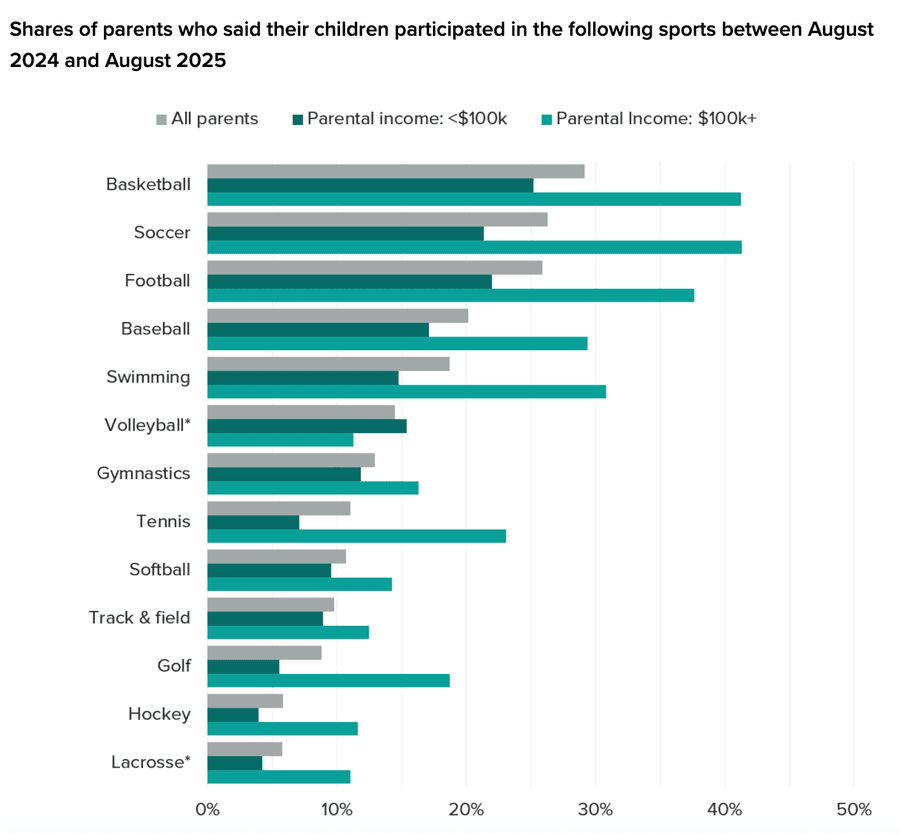
Basketball, soccer and football rise to the top across all families. But when it comes to swimming, tennis, golf, hockey and lacrosse, the kids most likely to play are the ones whose parents make over $100,000. Families earning less lean into football, baseball, and softball — sports with long-standing community access and lower costs.
This isn’t about who wants it more. It’s about who can afford to step through the doorway — and even then, wealthier families often bring better equipment, private coaching and specialized training with them.
The Divide We Don’t Like to Talk About
Aspen Institute’s Project Play has tracked this divide for years. Wealthier families spend almost four times more per child on sports than the lowest-income families and travel alone eats up 80% more of their budgets. That’s not just about a few weekends on the road — it determines which kids even get the chance to play.
And the gap shows up everywhere: kids from households under $25,000 participate in sports at far lower rates than those from $100,000+ homes. The Morning Consult data makes it clear: the starting line is staggered, tilted toward wealth.
What This Means for Our Kids
Think about the child who might have thrived in tennis but never touches a racquet or the kid who could’ve been a natural in the pool but doesn’t have access to lessons. That potential never gets the chance to grow.
And yet, there’s hope. Sports with low barriers — basketball and soccer — draw kids from every background. They prove that when the gate is open, children walk through it. But even here, income shadows the experience. A wealthy family can still layer on travel teams, private trainers and the best gear, widening the gap in development and opportunity.
Where Do We Go From Here?
If we want more kids to play — and thrive — not just the ones whose families can afford it, here’s where we start:
- Lower the first barrier. Registration fees travel, and gear are the biggest hurdles. Clubs and leagues offering scholarships and sliding scales make participation possible.
- Keep it local. Project Play data shows travel is the single biggest budget killer. Shorter seasons and closer competition keep more families in the game.
- Share their message. Organizations like Positive Coaching Alliance, now teaming with ESPN’s Take Back Sports initiative, provide ready-to-use tools for parents and coaches. And Project Play’s 63×30 goal — to get 63% of kids playing sports by 2030 — gives us a clear, shared target. The more we amplify these efforts at the team and community level, the faster they take root.
- Value multiple paths. Not every journey needs to run through an elite club. School teams, rec leagues, and community programs remain the most inclusive doors into sports.
The Bottom Line
The Morning Consult chart isn’t just about which sports are popular. It’s a mirror, reflecting how opportunity in youth sports bends toward money. If we want every child to experience the confidence, resilience and friendships sports bring, we need to widen that doorway.
Because when kids walk through, they don’t just play a sport — they discover themselves.

GET YOUTH INC UPDATES
Get real tools, fresh perspective, and inspiring stories to help you get the most from youth sports. Plus, you'll be entered for a chance to win premium fan wear to rep your favorite school or club